

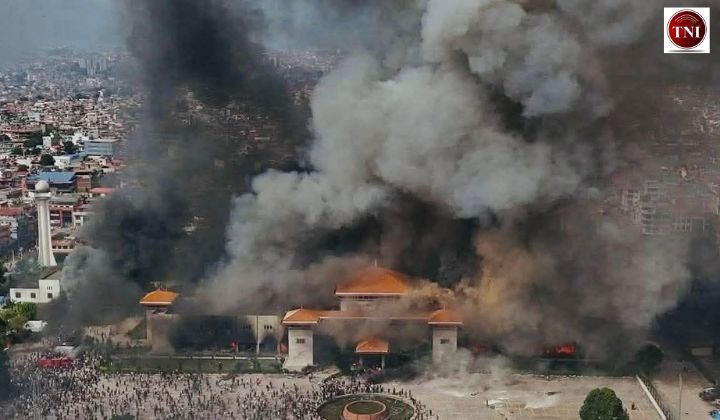
TNI Digital Bureau: Nepal plunged into political turmoil this week after a sudden ban on social media triggered a wave of youth-led protests that toppled Prime Minister KP Sharma Oli’s government. The demonstrations, led largely by Gen Z, quickly escalated into violent clashes, leaving at least 22 people dead and hundreds injured.
The government had blocked platforms such as Facebook, X, YouTube, and Instagram on September 5, citing failure to register with national authorities. Though the ban was lifted the following night, protests continued, fuelled by anger over corruption, inequality, and the privileges enjoyed by politicians and their families. Videos of so-called “Nepo Kids” flaunting luxury lifestyles while many youths struggled for jobs deepened public resentment.
In the capital Kathmandu, protesters defied curfew orders, setting fire to Parliament, the Supreme Court, and homes of senior leaders. Former Prime Minister Jhalanath Khanal’s wife, Rajyalaxmi Chitrakar, died after demonstrators torched their residence. Finance Minister Bishnu Prasad Paudel was beaten on the streets, while ex-PM Sher Bahadur Deuba and his wife were also attacked. Even Oli’s own home was targeted before he announced his resignation on Tuesday.
Support Independent Journalism? Keep us live.
The unrest paralysed the country. Tribhuvan International Airport was shut as army helicopters evacuated officials. Flights from India were cancelled, and border states like Bihar and Uttar Pradesh issued high alerts. India’s Ministry of External Affairs advised citizens to defer travel, while Andhra Pradesh set up an emergency cell for its nationals in Nepal.
International concern grew as the United Nations offered mediation and urged restraint. However, Kathmandu’s mayor Balen Shah, who has emerged as a popular figure among protesters, insisted that talks would only happen after the dissolution of parliament.
Observers say the movement reflects deeper discontent with Nepal’s leadership. Analysts compared it to recent youth-driven uprisings in Sri Lanka and Bangladesh. “The ban was just a trigger,” said Ajaya Bhadra Khanal of the Center for Social Innovation. “Anger over misrule, corruption, and shrinking opportunities had been building for years.”
With no prime minister in Nepal completing a full term since 1990, Oli’s fall highlights recurring instability. The army has pledged to safeguard unity and sovereignty, but the way forward remains uncertain. For Nepal’s Gen Z, however, the protests mark a new demand for accountability, opportunity, and freedom.
Comments are closed.