
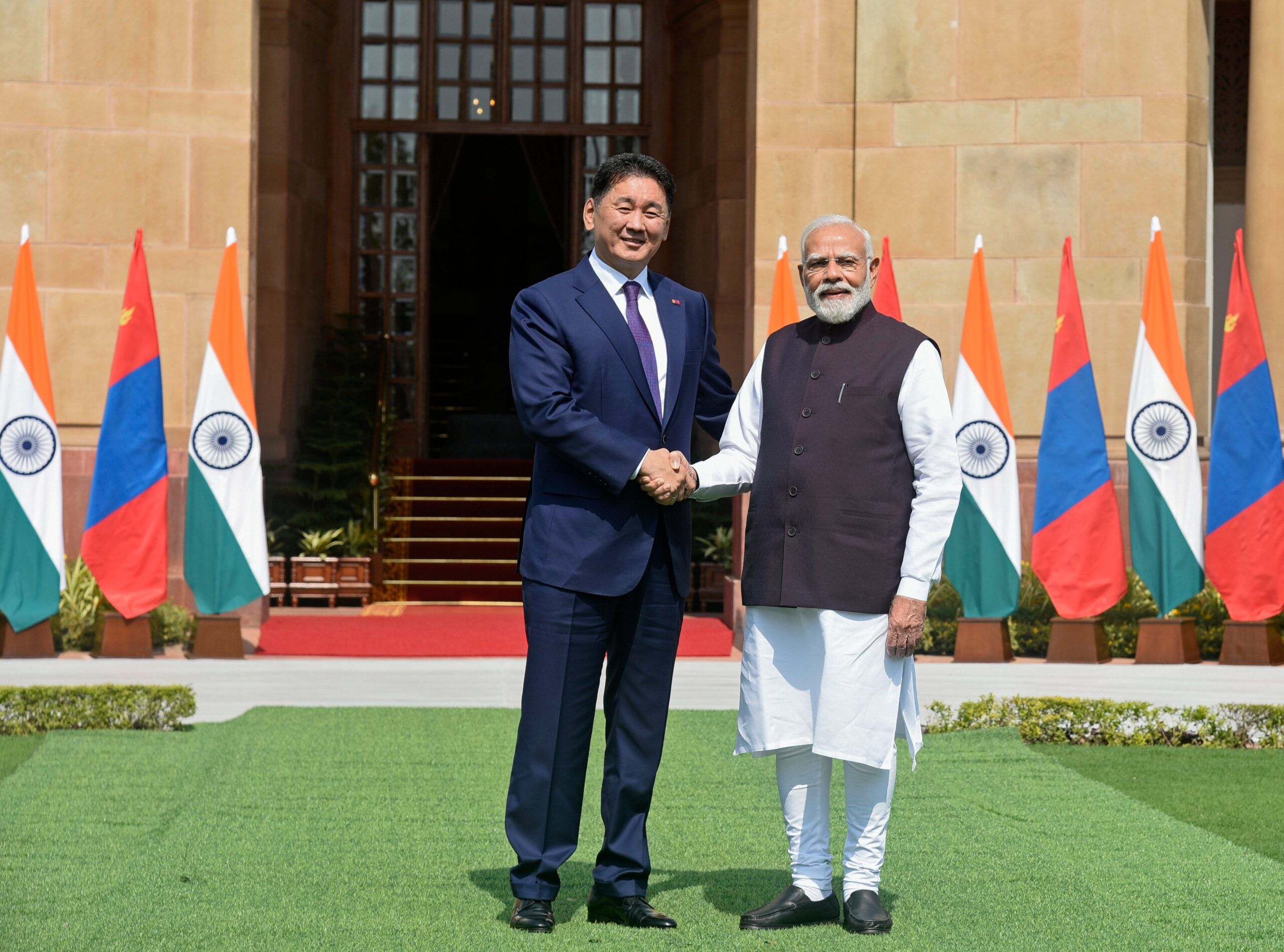
India and Mongolia, with their ties of civilizational affinities and a shared Buddhist past, have embarked on a new phase of their long-standing friendship as they commemorate seventy years of diplomatic relations and ten years of strategic partnership. The commemoration went beyond symbolism, it captured the increasing mutual confidence, cultural affinity, and geopolitical importance that both countries place on their relationship. The recent visit of the Mongolian President to India not only rekindled these ancient ties but strengthened them further through a chain of significant pacts and collaborations.
One of the strongest commitments reiterated was the Mongol Oil Refinery Project, a flagship project under development using India’s US$ 1.7 billion Line of Credit. When completed, this refinery will greatly enhance Mongolia’s energy self-sufficiency and prove India’s contribution to the country’s development process. The arrangement is more than just infrastructure—it is about co-growth, technological transfer, and long-term collaboration towards sustainable development.
The visit also saw a cultural reconnection that touched both countries profoundly. An MoU was exchanged between the Ladakh Autonomous Hill Development Council and Mongolia’s Arkhangai Province, reaffirming people-to-people and cultural exchanges between nations with a shared spiritual heritage of Buddhism. In a never-before move, India decided to send the sacred remains of Lord Buddha’s disciples—Sariputra and Maudgalyayana—to Mongolia. This will be followed by India’s assistance in digitizing almost one million ancient Buddhist manuscripts and creating a spiritual connection between Nalanda and the Gandan Monastery, two hotspots of Buddhist scholarship across the centuries.
The cooperation is also extended to the areas of mobility, trade, and energy security. The offer by India to issue free e-visas to Mongolian nationals is meant to enhance tourism, educational exchanges, and business linkages. The two nations also agreed to develop new channels of trade through third-country ports, deepen supply chains, as well as engage in the areas of critical minerals and uranium, areas that offer huge prospects for future economic strength and industrial partnership.
For India, Mongolia’s strategic position—landlocked between China and Russia, brought an important new dimension to its Act East and Indo-Pacific strategies. As both sides reaffirmed commitment to a rules-based, free, and open Indo-Pacific, their relationship embodied a common vision for regional stability and sustainable development. Beyond geography, it is a connection donpato of faith and friendship, tempered by time and trust.
Seventy years later, the India-Mongolia partnership continues to transform from ancient spiritual connections to contemporary strategic alignment. It is a tale of two democracies, one in the Himalayas and the other on the great steppes marching together to a future marked by cooperation, mutual respect, and shared ambitions.

