

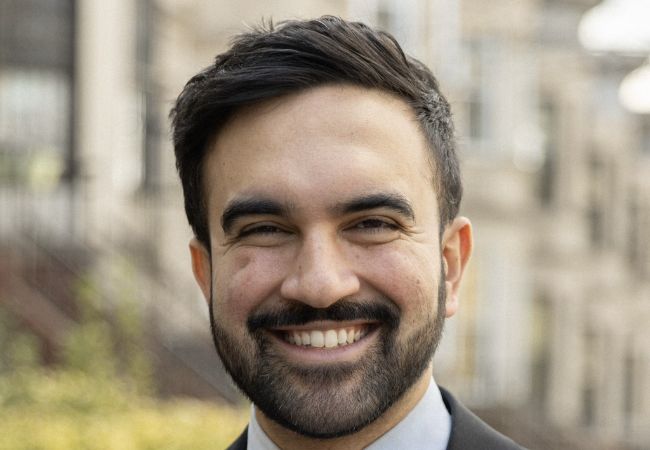
New York: Zohran Mamdani, a 34-year-old democratic socialist and three-term state assemblyman, has won New York City’s mayoral election, defeating former Governor Andrew Cuomo and Republican candidate Curtis Sliwa. His victory marks a historic moment, Mamdani will be the city’s first Muslim and South Asian mayor, and one of its youngest leaders in modern times.
Addressing a cheering crowd in Brooklyn, Mamdani called the win a triumph for New York’s working class. “For as long as we can remember, the working people of New York have been told that power does not belong in their hands,” he said. “Tonight, against all odds, we have grasped it.” Referring to Cuomo’s political legacy, he added, “You have toppled a political dynasty. I wish Andrew Cuomo the best in private life, but let tonight be the last time I say his name.”
Mamdani’s victory represents a major boost for the progressive wing of the Democratic Party. His campaign focused on housing affordability, free public buses, rent freezes for tenants in rent-stabilized apartments, and universal childcare funded by higher taxes on the wealthy. Nationally, his win is seen as a statement of confidence in left-leaning politics amid deep divisions within the Democratic Party over how to counter former President Donald Trump.
In his victory speech, Mamdani said, “If anyone can show a nation betrayed by Donald Trump how to defeat him, it’s the city that gave rise to him. We stop Trump, and the next one, by changing the very systems that created him.”
A Year-Long Rise
Born in Uganda to academic Mahmood Mamdani and filmmaker Mira Nair, Zohran moved to New York at age seven. He attended the Bronx High School of Science and graduated from Bowdoin College. Before entering politics, he worked as a housing counselor and pursued a brief rap career under the name “Mr. Cardamom.” Opponents often mocked his past music videos, but aides said his ability to connect with people helped his campaign stand out.
Throughout his campaign, Mamdani used social media effectively, producing multilingual videos in Urdu, Bangla, Spanish, and Arabic. One viral clip on “halal-flation” about rising food cart prices showed him interviewing vendors on cold nights about the struggles of small business owners. His campaign’s focus on affordability and community connection helped him overcome well-funded attacks from business groups that supported Cuomo.
A Historic Inauguration Ahead
Support Independent Journalism? Keep us live.
Mamdani will take office on January 1, 2026, leading a city of 8.5 million people, a $115 billion budget, and a workforce of nearly 300,000. His wife, Rama Duwaji, a 28-year-old artist of Syrian descent, will become New York City’s first Gen Z First Lady.
Mamdani’s deep ties with New York’s immigrant and working-class communities, especially cab drivers, have shaped his political career. In 2021, he joined cab drivers in a 15-day hunger strike for debt relief, earning national attention.
“Without the night shift, there is no morning,” he told taxi workers at LaGuardia Airport just before election day, a statement reflecting his campaign’s core message: power for the people who keep the city running.
The Indian Connection: How Mamdani’s Roots Link to Gujarat’s Mercantile History
Though Mamdani is known for his socialist politics in the U.S., his surname connects him to the historic Gujarati Muslim merchant community, the same region that produced India’s top industrial families, such as the Ambanis and Adanis.
According to an India Today report, Mamdani’s father, Mahmood Mamdani, descends from the Khoja trader community that migrated from Gujarat and Sindh to East Africa in the 18th century, building transoceanic trade networks across the Indian Ocean. Experts note that the surnames Mamdani, Ambani, and Adani share linguistic and regional roots.
According to Persian author Muhammad Ali Mojaradi, Mamdani comes from the Gujarati adaptation of “Muhammadan,” meaning a follower of Prophet Muhammad. Similarly, both Ambani and Adani are toponymic surnames derived from family origins in Gujarat’s trading towns.
While Mukesh Ambani and Gautam Adani represent modern industrial capitalism, Mamdani’s surname ties him to the same cultural and commercial heritage of Gujarat’s trading families, a community that once connected South Asia, Africa, and the Middle East through trade and migration.
In other words, Zohran Mamdani, a socialist leader in America, carries a name rooted in the same historic mercantile traditions that shaped some of India’s wealthiest business dynasties — bridging continents, ideologies, and centuries of shared history.
Comments are closed.