
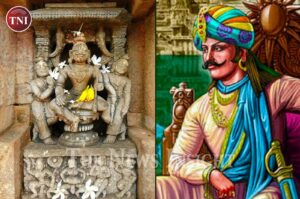
TNI Bureau: June 29 is widely celebrated as Gajapati dibasa to honour the golden age of Odisha’s cultural revival, combat capability and regional pride. It serves as a powerful reminder of Odisha’s rich culture, the impact and influence of the suryavanshi dynasty. This day marks as the 591st ascension day celebration, an occasion that connects the bridge between ancient royal traditions and the present day.
Gajapati dibasa traces it’s origin to June 29, 1435, when a commoner named Kapila Rauta ascended the throne as king Kapilendra Deva, the founder of the Suryavamsa Gajapati Empire. Legend has it, Kapila Rauta wasn’t born in the royal family and spent his early childhood as a cowherd. His journey from a common adult to the the mightiest emperor of medieval India is celebrated as a symbol of courage, strength and leadership.
One of the most interesting aspects of this legacy is how deeply it is intertwined with the spiritual life of Odisha. According to history, to commemorate the 591st coronation day, the iconic Suna Besha which is the magnificent gold ornamentation of the deities during the Ratha Jatra, was a tradition first introduced by the legendary Gajapati Kapilendra Deva. This proves how royal patronage not only supported the arts and administration but also actively evolved the religious practices that millions love today. It is a uplift to the fact that many of the traditions we often take for granted as “timeless” were, in fact, innovations by visionary rulers who sought to uplift the grandeur of their faith.
By honouring the 591st crowning anniversary at the M.K.C.G auditorium at Utkal University , the community continues to pay tribute to the contributions of these monarchs. Gajapati Dibasa, not just a celebration, but also a reminder to us to look beyond the surface of our current customs and recognise the human effort and historical context behind them and respect them. It nudges us to appreciate the foresight of leaders like Kapilendra Deva, whose influence remains visible in the heart of Jagannath culture. Through such observances, the legacy of the Gajapati dynasty is preserved, ensuring that the stories behind our most cherished traditions are never forgotten.

