
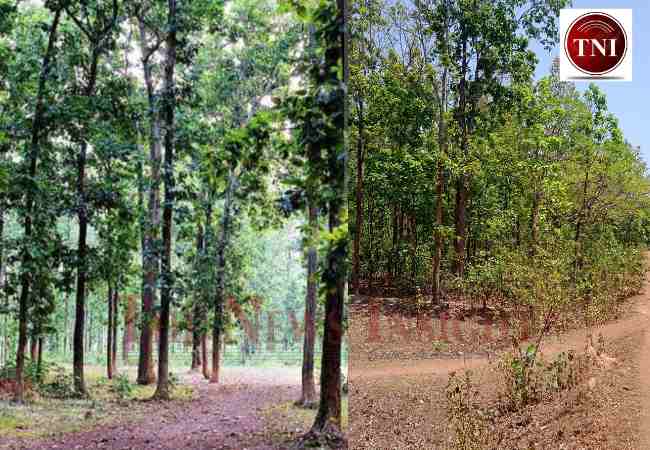
Baripada, by JB DASH: Asia’s largest Sal (Shorea robusta) forest in Similipal is facing a serious threat due to multiple factors, concluded a regional forestry workshop convened by noted volunteer Hemanta Dash.The workshop observed that the Sal forest, one of nature’s greatest gifts to Similipal, is under constant pressure from the timber mafia and several geo-physical challenges.
Sal trees and their products such as timber, wood, seeds, and leaves form a major source of livelihood for the local tribal communities, next only to Sabai grass. The tribals earn their living by making leaf plates from Sal leaves, which have a thriving market across the country.
The Odisha Forest Development Corporation (OFDC), which used to generate around ₹5 crore annually in the 1980s from Sal products like timber, leaves, and seeds, now collects barely ₹45 lakh per year. This drastic fall in revenue clearly indicates the rapid decline of Sal jungles in Similipal.
Recalling the past, retired forester Prabir Das noted that in 1926, when the Maharaja permitted the Bengal-Nagpur Railway (BNR) company under British management to carve out a route from Talbandh to Bangriposi to transport Sal sleepers for railway construction, the forests were still dense and abundant. However, in recent years, large-scale depletion of Sal forests has been witnessed.
Das further explained that the Sal tree is considered a female species, while the Asan tree serves as its male counterpart. The Sal grows more abundantly near Asan trees, and their absence leads to the decline of Sal jungles. Although a Sal tree can live up to 120 years, scientists have not yet succeeded in replicating Sal seedlings, which remain a natural gift exclusive to Similipal.
Years of commercial exploitation by government-owned corporations like the OFDC, coupled with illegal logging by timber mafias, have resulted in severe depletion of Sal forests across several regions, including Chandua, Budhikhamari, Tongasole, Sunaposi, Rangibeda, Godargadi, Sargachchia, Kakharusole, Dudhiasole, and Baidipur. Once known for their dense Sal cover, these areas now stand largely barren, a grim warning for Similipal’s fragile ecology.

